

Coffee Planting Area in Huangpu, Guangzhou Exceeds 45 Mu, Accounting for Over 80% of the City’s Total
Updated : 2026-07-30Changzhou Island in Huangpu District, Guangzhou, boasts a unique river-island ecosystem and a warm, humid climate, providing ideal conditions for tropical coffee cultivation. Covering 120 mu, the Red Lily Ecological Park Coffee Valley has introduced nearly 20 premium coffee varieties from China and abroad and cultivated 100,000 high-quality coffee seedlings, making it Guangzhou’s largest coffee-themed ecological landscape area.
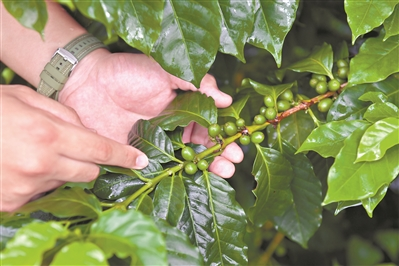
The park has leveraged scientific research resources from universities to explore the high-value utilization of coffee.
Coffee varieties including Pacamara, Red Bourbon and Catimor have taken root in the Coffee Valley. Wang Hongxing, Technical Director of Red Lily Coffee Valley, said, “We are selecting coffee varieties and seedlings best suited to Guangdong’s climate and soil conditions, and have already achieved initial results.”
Relying on research support from institutions including South China University of Technology, Red Lily Ecological Park Coffee Valley has also carried out studies on the high-value utilization of coffee. “In 2022, I transplanted coffee trees used for teaching at the university to Changzhou Island, and also brought Yunnan small-grain coffee seedlings here for cultivation,” said Chen Rong, a technical expert at Red Lily Ecological Park Coffee Valley and a senior engineer at South China University of Technology.
The park has developed a range of derivative products under the “Jiaguo Jiamei” brand, including green coffee drip bags, coffee steamed buns and coffee cookies. It has also launched the construction of a miniature smart coffee plantation, which will introduce digital management systems such as intelligent irrigation in the future.
Beyond selecting coffee varieties best suited to Guangdong, the launch of Jiaxiang Roasting Academy, which operates under a “front courtyard, back workshop” model, has provided full-chain talent support for Guangzhou’s coffee industry. Covering 2,300 square meters and equipped with advanced roasting equipment and testing instruments, the academy is the first in China to establish a comprehensive training system covering the entire coffee industry chain.
The academy also regularly offers free coffee courses and themed tasting events to the public, inviting residents to make “Warm Light Coffee” by hand and present it as gifts to community workers.
Huangpu District’s coffee planting footprint is rapidly expanding. According to statistics, the district currently has 45 mu of coffee plantations, accounting for over 80% of Guangzhou’s total and ranking first in the city. In addition to Red Lily Ecological Park, Lingtou Black Tea Creative Park in Changling Subdistrict has established a 5-mu coffee planting area, integrating it into the ecological landscape of the thousand-mu “Huangpu Red” tea plantations. Without disrupting the existing mountain vegetation, the park has created a near-natural composite ecosystem featuring “coexistence of tea and coffee, with dual aromas in one garden.” Xinlong Town is expected to plant 50 mu of coffee this year, with the area projected to reach 200 mu next year.
By then, the district’s coffee seedling cultivation scale will grow significantly, reaching 100,000 seedlings in 2026, 300,000 in 2027, and aiming for 2 million premium coffee seedlings in 2028. Huangpu is set to develop a distinctive Lingnan-style under-forest economy model.





Links
>
Copyright © Guangzhou Development District People's Government.
All rights reserved. Presented by CRI Online
粤ICP备16087157号-1
All rights reserved. Presented by CRI Online
粤ICP备16087157号-1