

Gaoyu Technology Partners with Huangpu District to Build a Low-Altitude Economy Demonstration Hub in the Greater Bay Area
Updated : 2026-07-13On July 9, Guangdong Gaoyu Technology Co., Ltd. (hereinafter referred to as Gaoyu Technology) signed separate strategic cooperation agreements with the Administrative Committee of Guangzhou Development Zone, Huangpu District Meteorological Bureau of Guangzhou, and the Guangdong-Hong Kong-Macao Greater Bay Area Research Center for Intelligent Meteorological Equipment. The parties will jointly establish the Gaoyu Technology Huangpu Low-Altitude Operation Demonstration Center.
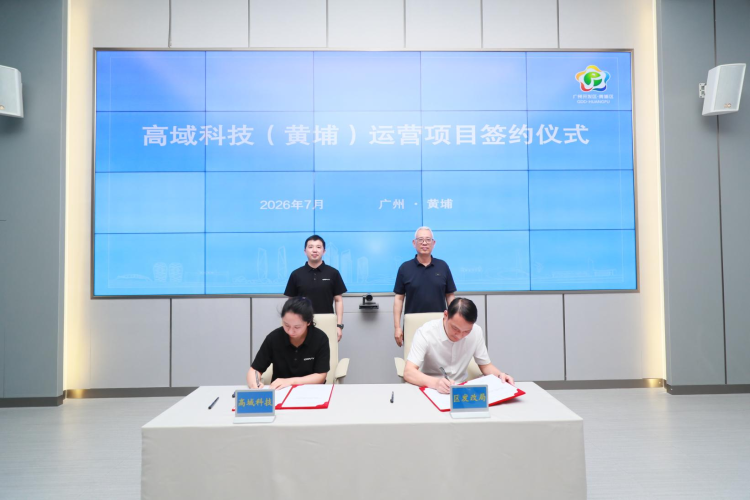
Signing ceremony (Photo provided by the organizer)
The demonstration center will feature five major functions, including low-altitude meteorological testing, operational demonstration, marketing displays, educational training, and innovation exploration. It will focus on key initiatives such as low-altitude cultural tourism in Jingxia Village under the “High-Quality Development Project for Hundreds of Counties, Thousands of Towns and Tens of Thousands of Villages,” low-altitude meteorological testing and standard system development at the World Meteorological Centre, pilot joint innovation projects across the low-altitude industry chain, and exploration of three-dimensional transportation scenarios, with the aim of building a leading low-altitude economy ecosystem in the Greater Bay Area.
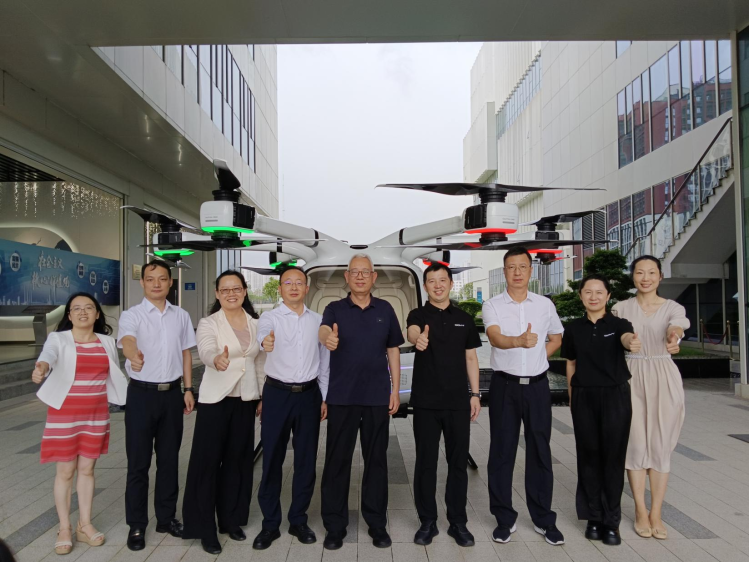
Photo provided by the organizer
Located in Huangpu District, Guangzhou, the Guangdong-Hong Kong-Macao Greater Bay Area Branch of the World Meteorological Centre (Beijing) is an important platform for China to provide weather forecasting products, technical exchanges, and training services to countries along the Maritime Silk Road. It also serves as an important window for international meteorological technology exchanges and the showcasing of China’s achievements in modernizing meteorological science and technology.
Relying on the World Meteorological Centre Branch, Huangpu District Meteorological Bureau has developed China’s first comprehensive support demonstration base for the low-altitude economy integrating communication, navigation, surveillance, and meteorological services, as part of a national pilot program for meteorological support of high-quality low-altitude economy development.
The bureau has established a low-altitude monitoring route linking the World Meteorological Centre Branch and Jingxia Village, supported by a network of multiple high-precision meteorological observation devices. It has also built a basic support platform for low-altitude flight meteorological services and deeply integrated it with the regional low-altitude traffic management service platform.
The platform can provide refined forecasting products with minute-level and second-level precision for flights along designated routes, forming a full-chain closed-loop support system covering “monitoring, analysis, early warning, and decision-making.” It provides accurate meteorological support for more than 100 low-altitude routes and thousands of flight operations across the district.
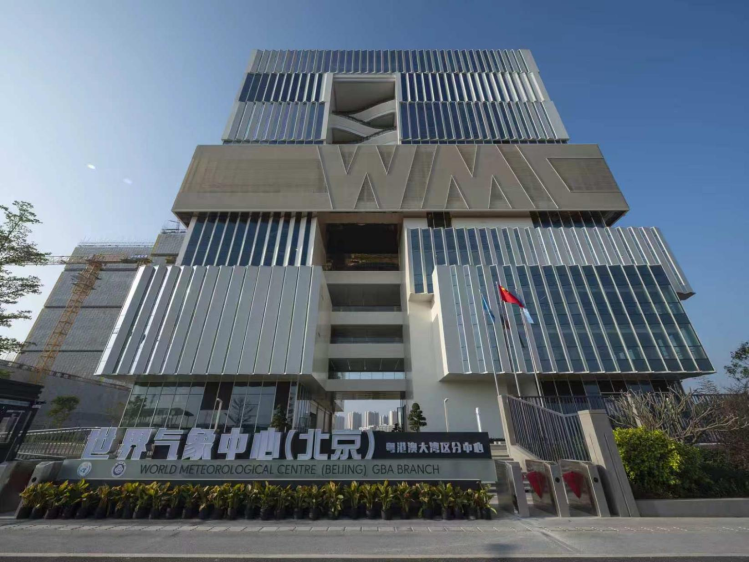
Photo provided by the organizer
The two parties will carry out cooperation in five key areas: special airborne observation tests for low-altitude meteorology; iterative upgrades of airborne meteorological observation equipment and new eVTOL models; development of a standard system for low-altitude flight meteorology; integrated innovation in the low-altitude meteorological industry; and joint establishment of an Innovation Studio for Model Workers and Skilled Craftsmen.
The goal is to develop the base into a national benchmark demonstration platform for meteorological support of the low-altitude economy, integrating flight testing, three-dimensional meteorological monitoring, and science education programs.
By Huang Chunmian, China Economic Net


Links
>
Copyright © Guangzhou Development District People's Government.
All rights reserved. Presented by CRI Online
粤ICP备16087157号-1
All rights reserved. Presented by CRI Online
粤ICP备16087157号-1