

Huangpu Immigration Inspection Ensures Smooth Export of Chinese NEVs as Xinsha Port Hits Record High
Updated : 2026-05-13On May 7, the vessel Asia docked at Guangzhou Port’s Xinsha Terminal. Under the policy of "advance declaration and pre-inspection for immediate operations upon arrival," the Second Duty Team of the Huangpu Immigration Inspection Station ensured efficient vessel clearance and the loading of more than 900 domestically produced new energy vehicles (NEVs), facilitating the smooth and efficient export of this batch of "Made in China" vehicles. Since the beginning of this year, NEV exports through the port have exceeded 25,000 units, marking a year-on-year increase of 265%.
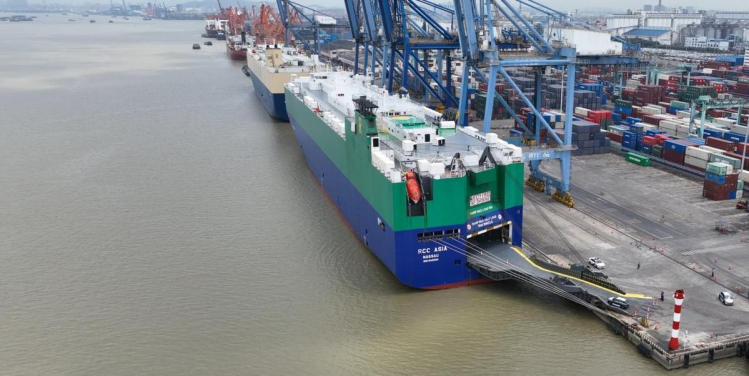

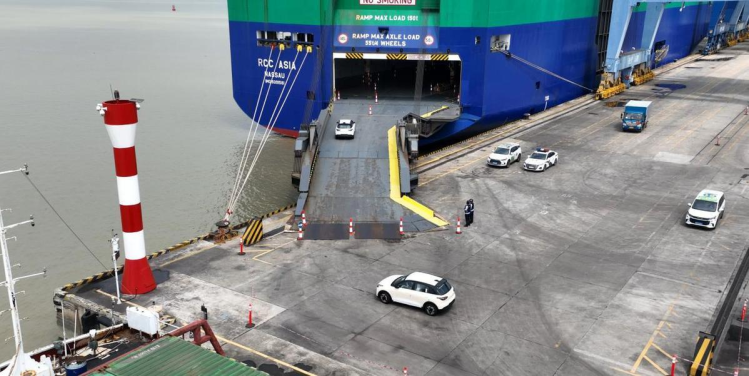
"In the past, we saw more imports; now, exports are surging," said Su Jieyu, head of the automobile business department at Guangzhou Port Group Xinsha Port Affairs Co., Ltd. He noted that with comprehensive demand upgrades in overseas markets such as Europe, Southeast Asia, and Oceania, energy-efficient and highly intelligent NEV models are gaining significant popularity.
Since April, several large roll-on/roll-off (ro-ro) vessels, including the Capricorn Leader, have departed from Xinsha Port for overseas markets such as Southeast Asia and Australia. With NEVs accounting for up to 85% of the cargo load on a single vessel, both the frequency of outbound voyages and the transport volume at the port have repeatedly set new historical records.
To accommodate the dense schedules, frequent port calls, and strict turnaround-time requirements of ro-ro vessels, the Second Duty Team of the Huangpu Immigration Inspection Station has implemented measures such as 24-hour on-demand inspection and immediate operations upon docking. A "green channel" for NEV exports has also been established to seamlessly follow up on every stage of the process, including vehicle loading, vessel inspection, and departure clearance. By providing one-stop entry-exit clearance procedures, the station maximizes the reduction of vessel berthing time, ensuring "zero backlog and zero delay" for complete vehicle exports.





Links
>
Copyright © Guangzhou Development District People's Government.
All rights reserved. Presented by CRI Online
粤ICP备16087157号-1
All rights reserved. Presented by CRI Online
粤ICP备16087157号-1